
Last updated October 2026
Broad Bay is a harbourside suburb of Dunedin on the Otago Peninsula, set along the shore of Otago Harbour. It feels like a small coastal settlement, even though it lies inside the Dunedin City boundary and is reached along Portobello Road. Houses look across the water, with the peak of Harbour Cone rising behind the bay.
The suburb takes in a wide harbour inlet and the smaller Turnbulls Bay, separated by a short point that ends at the headland of Yellowhead. The best-known building is Fletcher House, an Edwardian villa open to visitors on weekends and public holidays. A small full primary school and everyday harbour life give the place its character.
Official Suburb Facts
- Population (2023 Census)
- About 590, up 4% since 2018
- Land area
- 2.48 km²
- Location
- 10.0 km east of central Dunedin
- Council
- Dunedin City Council
- Neighbouring suburbs
- Company Bay, Portobello, Sandymount, Larnachs Castle
- Ward or local board
- Otago Peninsula Community Board, Dunedin City Council
- Getting there
- Portobello Road, the harbourside route between central Dunedin and the outer Otago Peninsula. Peninsula buses stop on Portobello Road. A shared walking and cycling path runs alongside the road.
- Schools
- Broad Bay School (Te Kura o Whakaohorahi), a state co-educational full primary for Years 1 to 8, at 4 Roebuck Rise
- Nearby landmarks
- Fletcher House; Harbour Cone; Yellowhead and Turnbulls Bay; Larnach Castle on the ridge above the bay
Who Lives in Broad Bay
About 590 residents in 260 households. From the 2023 Census, with the New Zealand figure alongside for comparison.
In Broad Bay
Places and businesses inside the official Broad Bay boundary.
Places
About Broad Bay
Broad Bay sits on the inner shore of the Otago Peninsula, where the land drops from the peninsula ridge to Otago Harbour. The wide bay that gives the suburb its name is paired with Turnbulls Bay to the north-east. Between them, a short point carries a small historic cemetery and runs out to the steep headland of Yellowhead.
From the water, Harbour Cone is the landmark behind the houses. A bluff, Grassy Point, lies between this shore and the harbourside settlements closer to the city, so the centre of Dunedin is not in view even though the road leads straight back to it.
The peninsula has a long Kāi Tahu (Ngāi Tahu) history. Ōtākou, further along the harbour, remains a principal marae community for this coast. An official Māori name and meaning for Broad Bay itself is not confirmed in council or gazetteer sources used here, so none is stated. The local school uses the name Te Kura o Whakaohorahi.
Before a reliable road existed, the harbour was the practical link between peninsula settlements and Dunedin, and a jetty was built at Broad Bay along with jetties at other harbourside places. The stone seawall and Portobello Road then tied the bay to the city.
Heritage New Zealand records that the peninsula harbour walls on this side were built between 1865 and 1880: contractors working for the Otago Provincial Council built the wall from Vauxhall as far as Broad Bay, the Portobello Road Board formed a few kilometres in Broad Bay and Portobello Bay, and prison labour was used after 1877 on the road from Broad Bay toward Taiaroa Head.
By the 1870s Broad Bay was a growing settlement with enough children to need a school. Broad Bay School opened in 1877.
Through the late nineteenth and early twentieth centuries the bay was also a summer retreat for well-off Dunedin families, who kept holiday houses here. That holiday trade is part of why a young builder, James Fletcher, found work on this shore.
Today Broad Bay is a quiet residential suburb rather than a resort strip. People live along the harbour edge and on the slopes behind it, travel into Dunedin for work and larger shops, and use the school, the library bookbus and the harbourside path as local anchors. Visitors come mainly for the views, the peninsula road, and Fletcher House.
History and Heritage
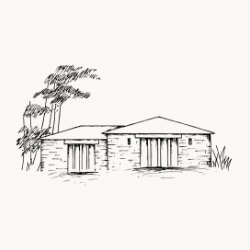
Fletcher House, at 727 Portobello Road, is the suburb’s standout historic building. James Fletcher and his partner Albert Morris built the double-bay Edwardian villa in 1909 for Hubert Green, the local postmaster and storekeeper, and his wife Agnes. It was the first house of this type built by Fletcher, who later founded Fletcher Construction. Because Broad Bay was already a holiday spot for wealthier Dunedin families, the job helped his reputation spread.
Heritage New Zealand lists the house, under the name House (Sir J. Fletcher), as a Category 2 historic place, list number 5230, designated on 19 April 1990. Fletcher Challenge bought the villa in December 1990 and restored it, with furnishing help from Toitū Otago Settlers Museum. It opened to the public in 1992.
The Otago Peninsula Trust now manages the house, with support from the Fletcher Trust. The trust describes it as a fully restored and furnished Edwardian villa. Tours run from 11am to 4pm on weekends and public holidays, except Christmas Day, and the published admission is $10 a person. Check with the trust before visiting, because hours and prices can change.
The harbourside stone walls are a second heritage layer. They are part of the Otago Harbour seawalls, a long run of vernacular stone work entered on the Heritage New Zealand list. In Broad Bay they are both a historic structure and the edge that carries Portobello Road.
Getting Around
Portobello Road is the way in and out. It follows the harbour edge from central Dunedin, around Grassy Point, through Broad Bay, and on toward the outer peninsula. The road is winding, and in places it is narrow, so drivers need to take care around people walking and around school times.
Peninsula buses stop on Portobello Road, linking the bay with the city and with settlements further along the harbour. A shared walking and cycling path runs beside the road, so the same route can be done without a car.
The Dunedin Public Libraries bookbus includes Broad Bay on its peninsula round, using the shared bus stop on Portobello Road. The library publishes the weekly time.
Roads also climb from the bay toward the peninsula ridge. Camp Road is the local link up toward Larnach Castle. There is no railway station and no ferry wharf in the suburb itself.
Getting Outdoors
The outdoors here is the harbour edge and the slopes behind the houses, not a formal reserve network. The shared path is the simple outing: a flat harbourside walk or ride with views across Otago Harbour.
Harbour Cone dominates the skyline above the bay. For a longer outing, Camp Road leads up toward the ridge and Larnach Castle, which sits above the settlement rather than in it.
The water is part of local life, and generations of school children have used the harbour as a playground. It is still a working harbour shore, not a patrolled swimming beach. Tides, cold water and boat traffic all matter, and there is no staffed lifeguard service in the suburb.
The Otago Peninsula’s wildlife, including sea lions and seabirds, is more often encountered on the ocean coast than on this inner harbour edge, but animals do move through the harbour and should be left alone.
Near Broad Bay
Just outside Broad Bay, within 10 km of its centre, nearest first.
Places
Businesses





Where to Learn More
Heritage New Zealand: House (Sir J. Fletcher): the official list entry for Fletcher House in Broad Bay.
Otago Peninsula Trust: Fletcher House: visitor information, address and published opening hours for the villa.
Education Gazette: Broad Bay School history: the school’s 1877 founding and oral histories of harbour life in the bay.
Frequently Asked Questions
Is Broad Bay part of Dunedin?
Yes. It is a suburb of Dunedin on the Otago Peninsula and is administered by Dunedin City Council. It feels more like a small harbourside settlement than an inner-city neighbourhood.
How do I get to Broad Bay?
Drive or take a peninsula bus along Portobello Road, which follows the Otago Harbour shore from central Dunedin. A shared path alongside the road is the walking and cycling route.
What is Fletcher House?
Fletcher House is an Edwardian villa at 727 Portobello Road, built in 1909 by James Fletcher for the local postmaster and his wife. It is listed by Heritage New Zealand and is open to the public on weekends and public holidays. The Otago Peninsula Trust publishes the hours and the $10 admission; confirm both before you go.
Does Broad Bay have a school?
Yes. Broad Bay School, also known as Te Kura o Whakaohorahi, is a state co-educational full primary for Years 1 to 8 at 4 Roebuck Rise. It opened in 1877. Older students travel off the peninsula for secondary school.
Is there a supermarket in Broad Bay?
No large shopping centre was confirmed in the suburb. Everyday shopping is generally done in central Dunedin or at larger settlements further along the peninsula. The library bookbus does stop on Portobello Road.
Who represents Broad Bay locally?
The Otago Peninsula Community Board, part of Dunedin City Council, covers Broad Bay. The city council is the territorial authority, and Otago Regional Council is the regional council.
Can I walk or cycle there from Dunedin?
Yes. A shared walking and cycling path runs alongside Portobello Road around the harbour edge. It is a long, flat trip from the city, and the road beside it can be busy.
What should I see while I am there?
Fletcher House is the main stop in the suburb. Harbour Cone is the peak behind the bay, and Larnach Castle sits on the ridge above, reached by roads including Camp Road. The harbourside path is the easiest walk.
Spotted something incorrect on this page? Let us know.
Explore Dunedin only lists suburbs officially recognised by Land Information New Zealand (LINZ), and Broad Bay is one of them. Suburb boundary: LINZ, CC BY 4.0.